
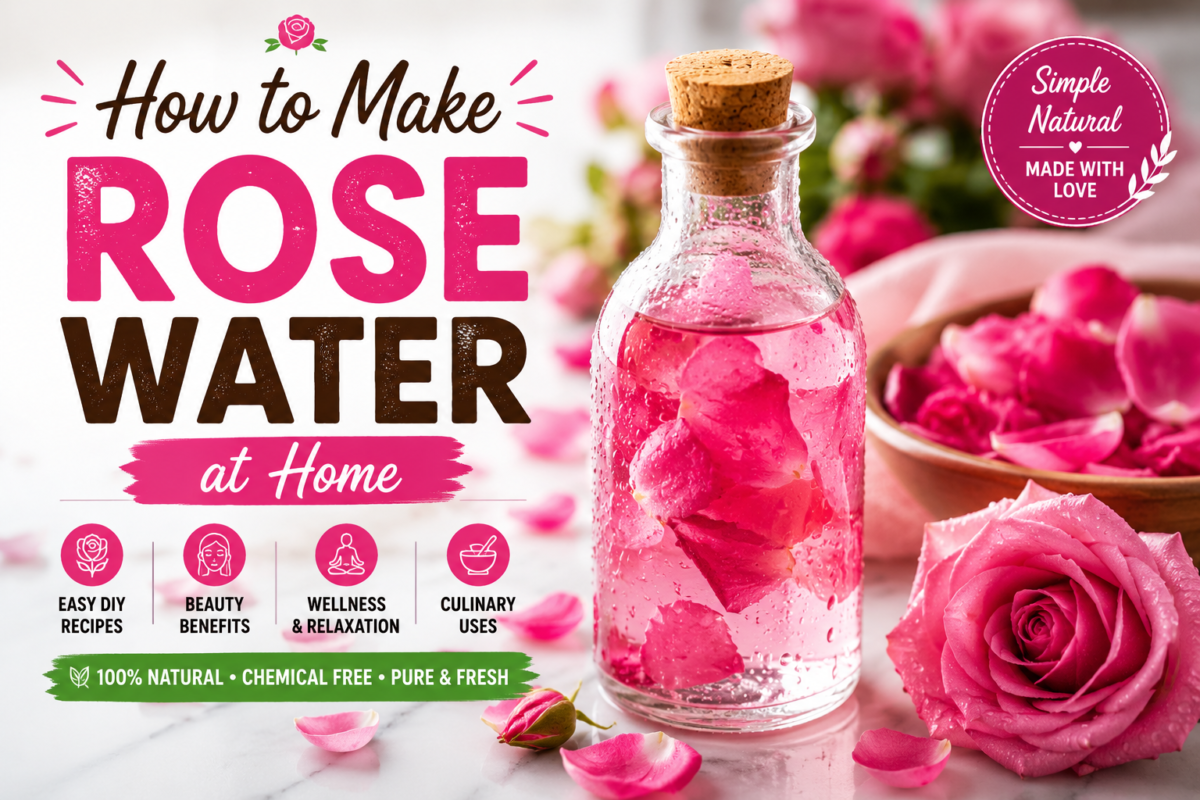
Rose water is one of nature’s most elegant beauty secrets, and the good news is you can make it at home in under 30 minutes with just two ingredients. Whether you’re after a skin-soothing toner, a calming aromatherapy mist, or a fragrant culinary addition, homemade rose water is purer, fresher, and far more affordable than anything you’ll find on a store shelf.
What Is Rose Water?
Rose water is a lightly scented liquid made by steeping or simmering rose petals in water, allowing the petals to release their natural oils, antioxidants, and aromatic compounds into the water. It has been used for centuries in Middle Eastern, South Asian, and Mediterranean cultures for skincare, cooking, and spiritual rituals. Today, it remains one of the most versatile natural beauty and wellness ingredients available.
Why Make Rose Water at Home?
Store-bought rose water often contains preservatives, synthetic fragrances, or diluted extracts. Making your own ensures:
- 100% pure ingredients: no additives or chemicals
- Cost-effective: a whole batch costs pennies compared to branded bottles
- Customizable strength: adjust concentration to your preference
- Fresher scent and potency: homemade retains more aromatic oils
- Eco-friendly: reusable glass jars, zero plastic waste
What You’ll Need
Before you begin, gather these essentials:
- Fresh or dried rose petals: ideally unsprayed, organic roses (Damask roses are best)
- Distilled or filtered water
- A medium saucepan or pot with a lid
- Fine mesh strainer or cheesecloth
- A sterilized glass jar or spray bottle for storage
3 Methods to Make Rose Water at Home
Method 1: The Simmering Method (Most Popular)
This is the easiest and fastest method, ideal for beginners.
Steps
- Rinse fresh rose petals thoroughly under cool water to remove dirt or debris.
- Add petals to a saucepan and cover them with just enough distilled water.
- Place the saucepan over medium-low heat and bring to a gentle simmer.
- Cover the pot with a lid to prevent the essential oils from escaping.
- Simmer for 20–30 minutes until the petals lose most of their colour.
- Remove from heat and allow to cool slightly.
- Strain through a fine mesh strainer or cheesecloth into a sterilized glass jar.
- Your rose water is ready to use.
Method 2: The Steeping Method (Gentle & Fragrant)
Best for preserving the delicate floral aroma.
Steps
- Place 1 firmly packed cup of fresh rose petals into a glass jar.
- Pour 2 cups of just-boiled water over the petals.
- Cover the jar and allow the petals to steep until completely cool.
- Strain through cheesecloth, squeezing the petals to extract all liquid.
- Transfer to a sterilized jar and refrigerate immediately.
Method 3: The Distillation Method (Most Pure & Concentrated)
This method mimics professional distillation and produces the most potent rose water.
Steps
- Fill the bottom of a large pot with fresh rose blossoms and cover them with distilled water.
- Place a heat-safe bowl inside the pot so it sits above the petals.
- Put the pot lid on upside down.
- Bring the water to a boil, then place ice cubes on top of the inverted lid.
- Reduce the heat to a bare simmer and maintain for 1.5–2 hours.
- Steam will condense on the lid and drip into the bowl.
- Carefully remove the bowl, allow it to cool, and store it in a sterilized glass bottle.
Benefits of Rose Water
Rose water is far more than a pleasant-smelling liquid. It offers multiple beauty, wellness, and relaxation benefits.
Skin Benefits
- Soothes inflammation and redness
- Hydrates and refreshes skin
- Helps reduce acne and blemishes
- Balances skin pH
- Minimizes pores
- Supports anti-aging by reducing fine lines
- Protects skin with antioxidants
Wellness Benefits
- Helps reduce stress and anxiety
- Supports relaxation and calmness
- May help soothe headaches
- Traditionally used to support digestion
- Refreshes tired eyes
Beauty Uses of Rose Water
Rose water is a multi-tasking beauty essential.
| Use | How to Apply |
|---|---|
| Face Toner | Apply after cleansing |
| Makeup Setting Spray | Mist lightly over makeup |
| Face Mist | Refresh skin throughout the day |
| Hair Rinse | Use after shampoo for shine |
| Face Mask Base | Mix with clay or honey |
| Eye Soother | Apply soaked cotton pads to eyes |
| Bath Addition | Add to bathwater for soft skin |
| Lip Moisturizer | Dab lightly onto lips |
Relaxation & Aromatherapy Uses
Rose water is widely used for relaxation and emotional wellness.
- Spray on pillows before bed
- Use as a room mist
- Add to baths for stress relief
- Use during meditation or yoga
- Apply warm compresses for headaches
- Add foot soaks to reduce fatigue
Safety Tips & Precautions
Rose water is generally safe, but keep these precautions in mind:
- Always perform a patch test first
- Use only organic, pesticide-free roses
- Avoid direct contact with the eyes
- Do not use mouldy or old petals
- Stop use immediately if irritation occurs
- Consult a doctor if pregnant or nursing
How to Store Rose Water
Proper storage helps maintain freshness and effectiveness.
- Refrigerate immediately after making
- Store in sterilized glass bottles
- Keep away from direct sunlight
- Add vitamin E oil or a splash of vodka for a longer shelf life
- Freeze in ice cube trays for extended storage
Homemade rose water usually lasts:
- 1-2 weeks refrigerated
- Up to 1 month with natural preservatives
Culinary Uses of Rose Water
Rose water is also popular in cooking and desserts.
- Add to lemonade or mocktails
- Use in cakes and cupcakes
- Flavor rice pudding or desserts
- Mix into yogurt or smoothies
- Add to salad dressings
Frequently Asked Questions on Rose Water
How long does homemade rose water last?
Homemade rose water lasts about 1–2 weeks in the refrigerator. With natural preservatives, it may last up to a month.
Can I use any rose?
Yes, but Damask roses are considered the best due to their strong fragrance.
Can I use dried rose petals?
Absolutely. Dried petals work well, though fresh petals usually produce a stronger aroma.
Is rose water good for all skin types?
Yes, rose water is suitable for oily, dry, combination, and sensitive skin.
Can I drink rose water?
Yes, food-grade homemade rose water is commonly used in beverages and desserts.
Does rose water help acne?
Yes. Its antibacterial and anti-inflammatory properties may help reduce acne and redness.
