
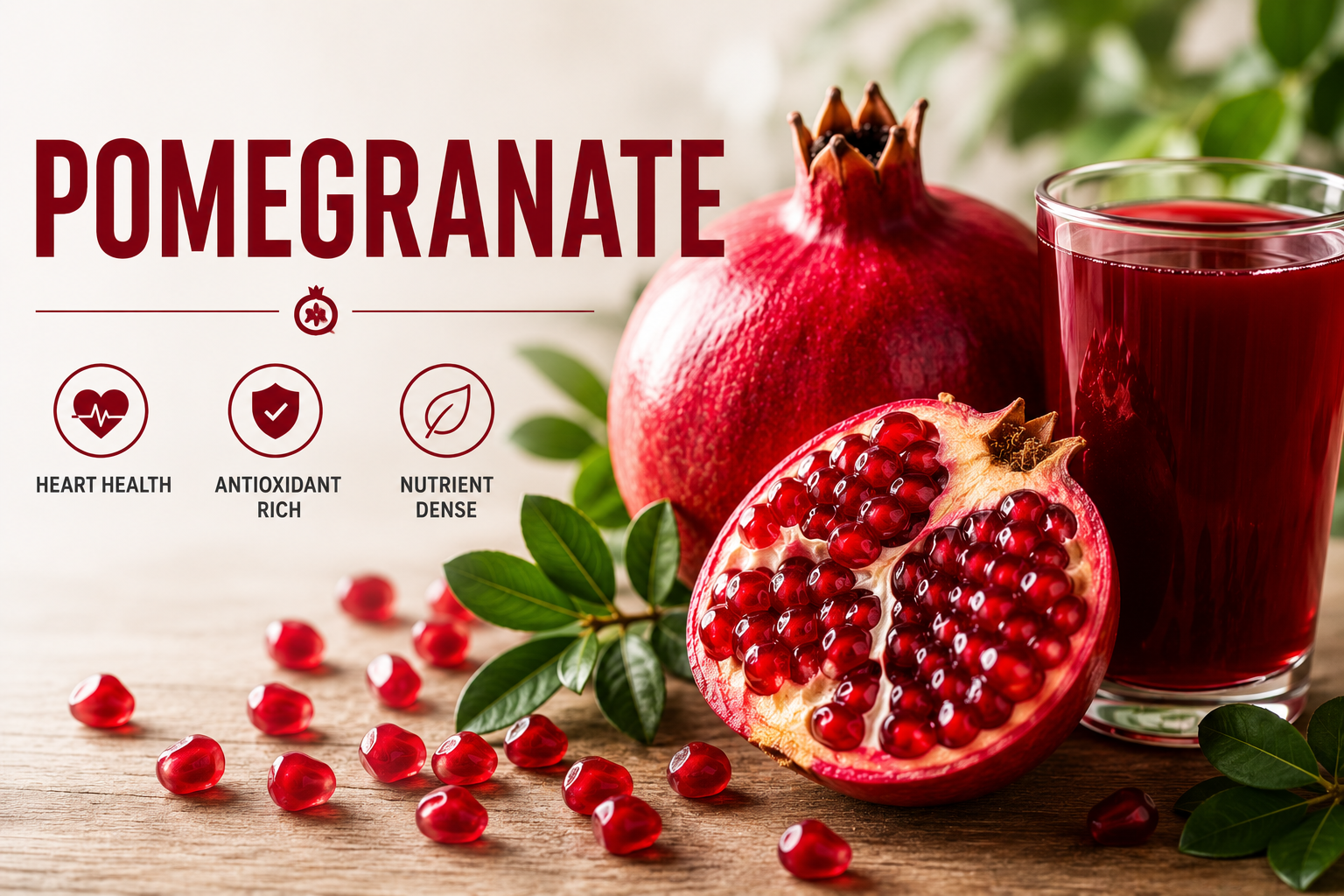
There is a reason pomegranates have been celebrated for thousands of years across cultures, cuisines, and medicinal traditions. Bursting with jewel-like seeds called arils, this ancient fruit is not just beautiful to look at. It is one of the most nutrient-dense, antioxidant-rich foods on the planet. Whether you are curious about the health benefits of pomegranate juice, want to know how to cut and eat one properly, or are looking for creative pomegranate recipes, this complete guide covers everything you need to know in one place.
What Is a Pomegranate?
A pomegranate is a round, red to deep-crimson fruit that grows on the Punica granatum tree, native to the region from Iran to Northern India. It is now cultivated across the Mediterranean, the Middle East, South Asia, California, and South America. The fruit typically measures 5 to 12 cm in diameter and contains hundreds of edible seed sacs called arils, with juicy, translucent red pulp surrounding a small white seed.
Pomegranates are in season from September through February in the Northern Hemisphere. They symbolize fertility, prosperity, and health in ancient Greek, Persian, Jewish, and Christian traditions.
Pomegranate Nutrition Facts
Pomegranates are impressively nutritious for their calorie count. Here is the nutritional profile for 100 grams of raw pomegranate arils (USDA data):
- Calories: 83 kcal
- Carbohydrates: 18.7 g
- Sugars: 13.7 g
- Dietary Fiber: 4 g (14% DV)
- Protein: 1.7 g
- Fat: 1.2 g
- Vitamin C: 10.2 mg (11% DV)
- Vitamin K: 16.4 mcg
- Potassium: 236 mg
- Folate: 38 mcg
- Magnesium: 12 mg
A single medium pomegranate (about 282 g) provides roughly 234 calories and higher absolute amounts of the above nutrients.
Key Nutrients Worth Highlighting:
- Punicalagins: Powerful, unique antioxidants with high biological activity.
- Punicic acid: A conjugated linolenic acid in the seed oil.
- Dietary fiber: Supports digestion.
- Vitamin K, Folate, and Potassium: Important for bone health, cell function, and blood pressure regulation.
12 Evidence-Based Health Benefits of Pomegranate
- Loaded with Powerful Antioxidants
Pomegranate arils and juice are rich in punicalagins, anthocyanins, and tannins. Commercial pomegranate juice often shows antioxidant activity approximately three times higher than red wine or green tea in lab tests. - Supports Heart Health
Regular consumption is linked to reduced LDL oxidation, lower blood pressure, reduced arterial inflammation, and slower plaque buildup. Meta-analyses support modest cardiovascular benefits. - Fights Inflammation
Punicalagins are potent anti-inflammatory compounds that can reduce markers like CRP. - May Help Prevent Cancer
Lab and early clinical studies show promise for slowing prostate cancer progression (e.g., PSA levels), inhibiting breast cancer cell growth, and affecting other cancers. It is not a treatment but may support a preventive diet. More human trials are needed. - Helps Lower Blood Pressure
Multiple meta-analyses of randomized trials show that daily pomegranate juice (around 150–240 ml) can significantly reduce systolic and diastolic blood pressure. - Supports Brain and Memory Health
Some studies indicate improved memory and protection against oxidative stress in the brain. - Promotes Digestive Health
High fiber content aids regularity and gut health. Extracts may help reduce intestinal inflammation. - Has Antibacterial and Antifungal Properties
Effective against certain oral bacteria, Candida, and other pathogens. - May Improve Exercise Performance
Natural compounds can enhance blood flow and delay fatigue in some studies. - Supports Urinary and Kidney Health
May help reduce kidney stone risk through antioxidant effects. - Benefits of Men’s Sexual Health
Improves blood flow via nitric oxide; may support erectile function as a dietary aid. - Supports Immune Function
Vitamin C, antioxidants, and other compounds bolster immunity.
Pomegranate Juice vs. Pomegranate Seeds (Arils): Which Is Better?
| Feature | Pomegranate Juice | Pomegranate Seeds (Arils) |
|---|---|---|
| Fiber content | Very low | High |
| Antioxidants | Highly concentrated | Good, plus fiber benefits |
| Sugar per serving | Higher | Moderate |
| Convenience | Easy | Requires preparation |
| Best for | Quick antioxidant boost, heart health | Overall nutrition and digestion |
Eating whole arils is generally superior for fiber and complete nutrition. Choose 100% pure juice with no added sugar when drinking juice.
How to Cut and Eat a Pomegranate
Water Method (Least Messy):
- Cut off the crown.
- Score the skin into quarters.
- Submerge in water and break apart.
- Separate arils underwater (they sink, pith floats).
Spoon Method: Cut in half and tap firmly with a wooden spoon over a bowl.
Pro tip: Pomegranate juice stains. Wear an apron.
Top Pomegranate Recipes
- Pomegranate Juice: Blend arils and strain.
- Pomegranate Salad Dressing: Mix juice, olive oil, lemon, salt, and cumin.
- Pomegranate Guacamole: Add arils for crunch and antioxidants.
- Pomegranate Overnight Oats: Add to oats, chia, yogurt, and milk.
- Pomegranate Molasses: Simmer juice with lemon until thick, great glaze for meats and vegetables.
Pomegranate for Skin and Beauty
Antioxidants protect against UV damage, support collagen, reduce aging signs, fight acne-causing bacteria, and brighten skin tone. Used in many premium skincare products.
Side Effects and Safety: Who Should Be Careful?
Pomegranate is safe for most people in food amounts. Considerations include:
- Drug Interactions: May interact with blood pressure medications, statins, and certain drugs metabolized by CYP3A4 or CYP2D6 (similar to grapefruit). Consult a doctor.
- Blood Pressure: Can lower BP, monitor if on medication.
- Surgery: Stop high amounts 2 weeks prior.
- Allergies: Rare but possible.
- Pregnancy: Safe in food amounts; consult a doctor for extracts/supplements.
How to Store Pomegranate
- Whole at room temperature: 1–2 weeks.
- Whole in fridge: Up to 2 months.
- Arils in fridge: Up to 5 days.
- Arils in freezer: Up to 12 months.
- Fresh juice: Up to 3 days in the fridge.
Pomegranate vs. Other Superfruits
Pomegranate stands out for its unique punicalagins and strong cardiovascular research support.
Frequently Asked Questions About Pomegranate
What are the health benefits of eating pomegranates daily?
May support heart health, reduce inflammation and blood pressure, improve memory, and boost immunity and digestion.
Is it better to eat seeds or drink the juice?
Whole arils are better for fiber. Juice provides concentrated antioxidants.
How many arils per day?
½ to 1 cup (80–150 g) or 150–240 ml pure juice is a common recommendation.
Can you eat the white seeds inside?
Yes, they are edible and provide a pleasant crunch.
Best time to eat?
Morning or as a snack. No strict rule.
Does it help with weight loss?
Low-calorie, high-fiber option that may support overall health in a balanced diet.
Is pomegranate good for diabetics?
May improve some markers, but the juice is sugary, monitor portions, and consult a doctor.
What does a ripe pomegranate look like?
Heavy, deep red, slightly angular, firm skin without bruises.
Is a pomegranate a citrus fruit?
No, it belongs to the Lythraceae family.
Conclusion: Why Pomegranate Deserves a Place in Your Daily Diet
Pomegranates combine ancient tradition, great taste, and growing scientific support. Adding this superfruit, whether as arils, juice, or in recipes, is a delicious way to boost antioxidants and support overall health. Start small and enjoy the vibrant benefits.
