
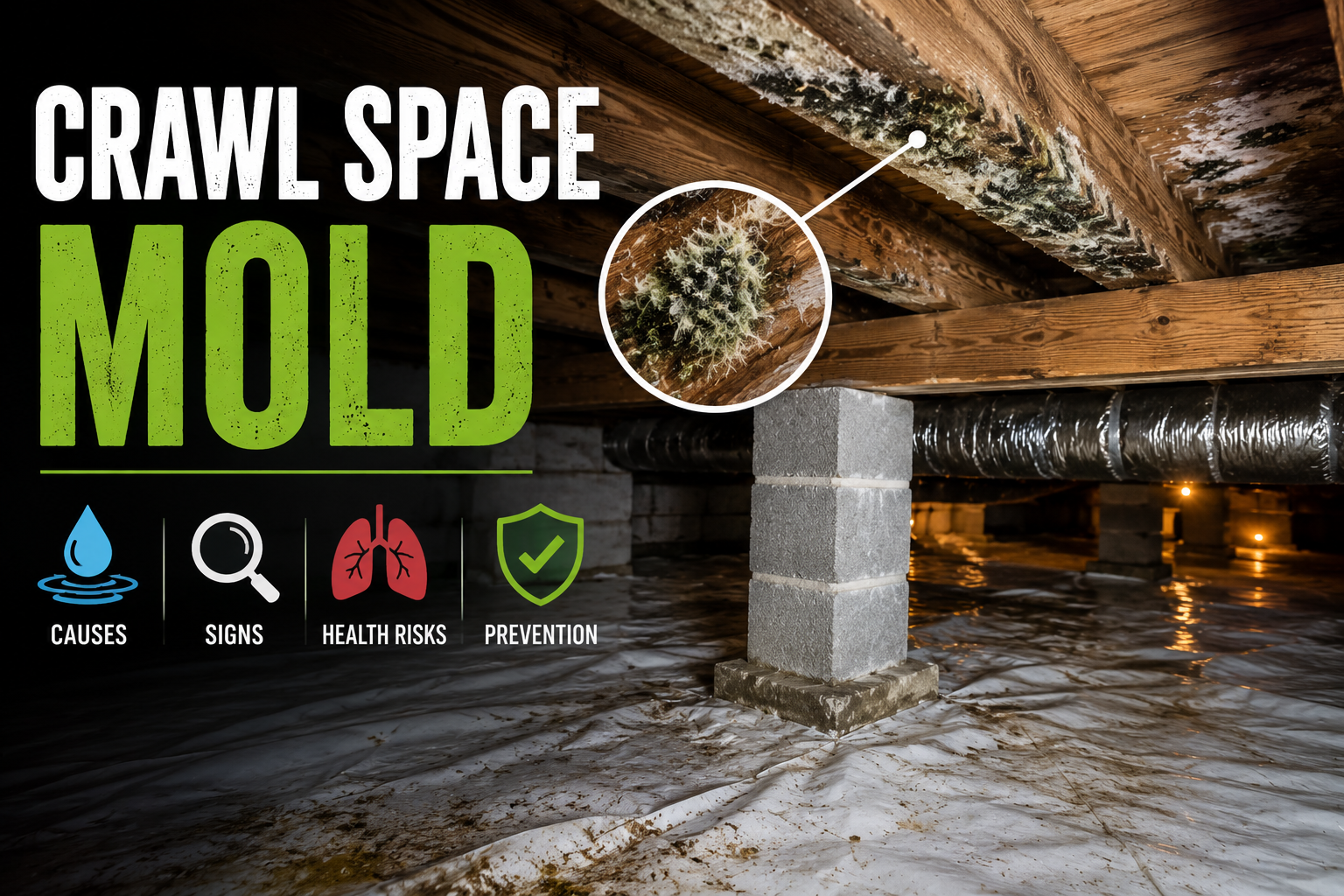
You probably do not think much about what is happening under your home. But if your crawl space is harboring mold, you are breathing the consequences every single day. Many experts note that a significant portion of the air in your home, often cited as up to 50% on the first floor, can originate from the crawl space. That means mold growing beneath your floors is not just a structural problem. It is a health hazard sitting directly beneath your family. This complete guide explains exactly what causes crawl space mold, how to spot it, what it does to your health, and the most effective ways to remove it and stop it from coming back.
What Is Crawl Space Mold?
Crawl space mold refers to any species of mold or mildew that grows in the unconditioned area between the ground and the first floor of a home. Crawl spaces are particularly vulnerable because they combine moisture with abundant organic material (wood joists, beams, subflooring, and insulation).
Mold spores are everywhere. They only become a problem when they find suitable moisture, warmth, and food sources. Poorly managed crawl spaces provide ideal conditions.
Why Are Crawl Spaces So Prone to Mold?
Crawl spaces are typically:
- Unconditioned (no active temperature or humidity control)
- Located directly above bare soil that releases moisture
- Poorly ventilated or ventilated with humid outdoor air
- Difficult to access and inspect regularly
- Filled with wood and paper-based materials that mold loves
Top Causes of Crawl Space Mold
- High Humidity: Relative humidity above 60% supports mold growth on wood.
- Ground Moisture and Evaporation: Bare soil releases constant moisture without a proper vapor barrier.
- Poor Drainage Around the Foundation: Rainwater, clogged gutters, and improper grading direct water toward the home.
- Improper Ventilation: In humid climates, traditional vents can introduce more moisture than they remove.
- Leaky Plumbing: Even slow leaks or condensation on cold pipes provide sustained moisture.
- Flooding or Water Intrusion: Must be addressed within 24-48 hours to prevent rapid mold growth.
- Construction Exposure: Wood can get wet during building and start growing mold early.
7 Warning Signs You Have Crawl Space Mold
- Persistent musty or earthy odor, especially on lower floors
- Worsening allergy or respiratory symptoms indoors
- Visible fuzzy growth (white, green, gray, or black) on wood or insulation
- Warping, buckling, or sagging floors
- Condensation on windows or increased indoor humidity
- New pest activity (insects and rodents love damp areas)
- Unexplained rise in energy bills (degraded insulation)
Health Risks of Crawl Space Mold
Mold spores, fragments, and mycotoxins can travel through HVAC systems and natural air movement into living areas. Common symptoms include coughing, sneezing, eye/nose/throat irritation, headaches, fatigue, wheezing, and worsened asthma.
Highest-risk groups: Children, the elderly, people with asthma/allergies, immunocompromised individuals, and pregnant women. Prolonged exposure, especially to Stachybotrys (black mold), can lead to more serious respiratory issues.
Types of Mold Commonly Found in Crawl Spaces
- Cladosporium: Green/black/brown, moderate risk, very common
- Penicillium: Blue-green, moderate risk, spreads quickly
- Aspergillus: Various colors, moderate to high risk, some produce mycotoxins
- Stachybotrys (Black Mold): Dark black/slimy, high risk, needs constant moisture
- Serpula lacrymans (Dry Rot): Brown/crumbly, high structural risk
How to Remove Mold from a Crawl Space: Step-by-Step
DIY vs. Professional
DIY only for small areas (<10 sq ft), surface mold, and after fixing moisture. Hire professionals for larger areas, black mold, structural damage, or health symptoms.
DIY Steps:
- Wear full PPE (P100 respirator, goggles, gloves, coveralls).
- Fix the moisture source first (critical).
- Use a HEPA air scrubber for negative pressure.
- Dry the area thoroughly (wood moisture content <15%).
- Remove heavily contaminated insulation and damaged materials.
- Clean surfaces with HEPA vacuum, then vinegar (1:1), borax solution, or professional antimicrobial products.
- Apply mold-resistant encapsulant or borate treatment.
- Retest air quality.
Crawl Space Mold Prevention: Long-Term Solutions
- Vapor Barrier: 6-mil minimum (thicker reinforced is better) over soil.
- Crawl Space Encapsulation: Best long-term solution: seal vents, install thick barrier, insulate walls, add dehumidifier.
- Dedicated Crawl Space Dehumidifier: Maintain RH below 55% (ideally 45-55%).
- Improve Drainage and Grading: Slope soil away from the foundation.
- Regular Plumbing and Foundation Inspections.
DIY vs. Professional Mold Remediation
DIY: Low cost, suitable for minor issues.
Professional: $500–$4,000+ for crawl space remediation (depending on size/severity); encapsulation $5,000–$15,000. Professionals offer better equipment, guarantees, and safety.
How Much Does Crawl Space Mold Remediation Cost? (2026)
- Minor (under 10 sq ft): $500–$1,500
- Moderate: $1,500–$3,500
- Severe/widespread: $3,500–$6,000+
- Full encapsulation: $5,000–$15,000+
Costs vary by location, access, and damage extent. Compare to potential structural repairs and health costs.
Frequently Asked Questions About Crawl Space Mold
Is crawl space mold dangerous?
Yes, it affects indoor air quality and can cause respiratory issues, allergies, and more serious problems with prolonged exposure.
Can I remove it myself?
Yes, for small surface areas after fixing moisture. Larger or structural issues need professionals.
What kills mold in a crawl space?
HEPA vacuuming + antimicrobial solutions like vinegar, borax, peroxide-based products, or professional treatments.
Will mold come back?
Yes, unless the moisture source is fixed.
What is crawl space encapsulation?
Sealing the space with vapor barriers, insulation, and a dehumidifier to control moisture and improve air quality.
Does homeowners’ insurance cover crawl space mold?
Only if caused by a sudden, covered peril (e.g., burst pipe). Gradual moisture, poor maintenance, or flooding is usually not covered. Check your policy.
What humidity level prevents mold?
Keep relative humidity below 55% (ideally 45-55%). Above 60% significantly increases the risk.
How long does remediation take?
1–2 days for minor issues; 3–7+ days for severe cases.
Conclusion: Do Not Ignore What Is Under Your Home
Crawl space mold is easy to overlook but can significantly impact your family’s health and your home’s integrity. Address moisture sources immediately, remediate properly, and invest in prevention through vapor barriers, dehumidification, or full encapsulation. A healthy crawl space means cleaner air, stronger structure, and greater peace of mind.
