
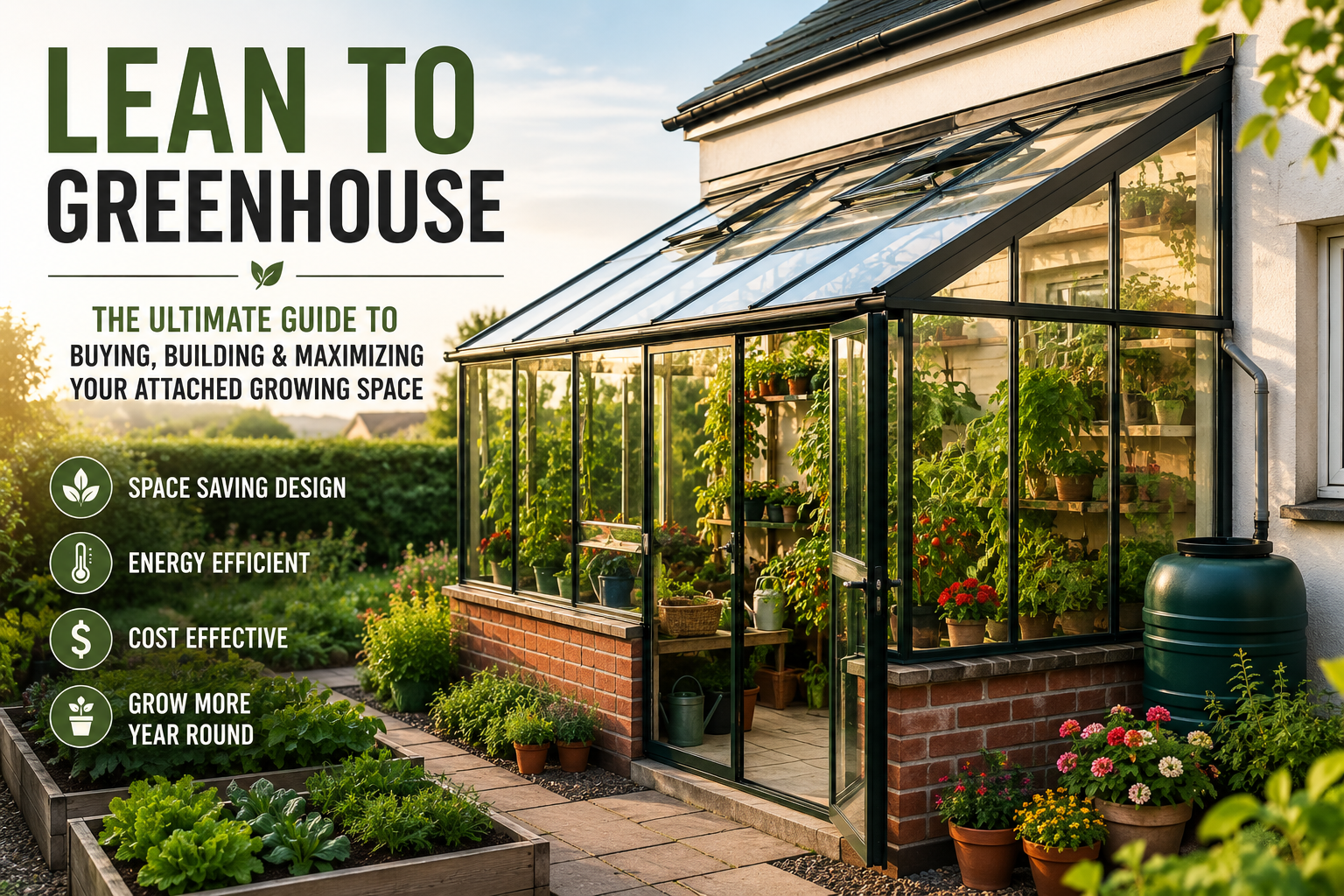
A lean to greenhouse can transform your gardening experience by letting you grow fresh produce, vibrant flowers, and tender plants year round, even with limited backyard space. These practical attached structures use an existing wall for support and thermal benefits, making them an excellent choice for urban gardeners, homeowners with small plots, and anyone seeking an efficient, cost effective way to extend the growing season. Whether you want a lean to greenhouse kit, DIY plans, or design inspiration, this comprehensive guide covers all the essentials.
What Exactly Is a Lean To Greenhouse?
A lean to greenhouse is a single slope structure that attaches to an existing building, such as a house, garage, or shed. It shares one full wall with the structure, while the other three sides and the sloping roof use glazing for maximum light. This design creates a functional growing space that saves materials and integrates seamlessly with your property.
Sizes typically range from compact 4×6 foot models ideal for starters to larger 10×20 foot or custom options for serious production. The shared wall provides structural stability and acts as a heat reservoir, helping regulate temperatures naturally.
Why a Lean To Greenhouse Makes So Much Sense
Home gardeners choose lean to models for compelling practical advantages:
- Space Saving Design: Perfect for narrow side yards, patios, or against fences where a freestanding greenhouse would not fit.
- Energy Efficiency: The attached wall absorbs daytime heat and releases it slowly, reducing the need for supplemental heating.
- Convenient Access: Step straight from indoors, making daily care easier in any weather.
- Lower Costs: Fewer materials needed compared to full structures, plus potential savings on utilities.
- Enhanced Stability: The anchored design holds up better in wind and storms.
- Aesthetic Integration: Adds charm and value to your home while blending with existing architecture.
Many users report starting seedlings earlier in spring and harvesting later into fall thanks to the protected microclimate.
Lean To vs Freestanding Greenhouse: A Practical Comparison
Lean To Strengths:
- Better heat retention from the shared wall
- Reduced material and installation costs
- Easier utility connections
- Superior stability and weather resistance
Freestanding Strengths:
- Maximum sunlight from all directions
- Greater placement flexibility
- Larger overall capacity options
A south facing lean to often performs comparably to a freestanding model in light while excelling in energy efficiency. Consider your available wall space and climate when deciding.
Planning the Perfect Location
Location determines success more than almost any other factor.
Ideal Orientation:
- South facing for maximum sunlight in the Northern Hemisphere.
- Southeast or southwest as strong alternatives.
- Avoid north facing walls unless growing shade loving plants.
Key Considerations:
- Ensure the wall is structurally sound and suitable for attachments.
- Check for good drainage to prevent water pooling.
- Proximity to water and power sources simplifies setup.
- Review local building codes and permits early.
Choosing the Right Size and Materials
Size Guide:
- Small (4×6 to 6×8 feet): Great for herbs, seedlings, and overwintering.
- Medium (8×10 to 10×16 feet): Versatile for vegetables, flowers, and working space.
- Large (12 feet and up): Ideal for serious production or multi use garden rooms.
Glazing Options:
- Polycarbonate: Affordable, insulating, lightweight, and impact resistant. Twin or multi wall versions offer excellent energy savings.
- Glass: Superior light transmission and classic look, but heavier and more fragile.
- Poly Film: Budget temporary option that needs frequent replacement.
Frame Materials:
- Aluminum: Low maintenance and durable.
- Wood (cedar preferred): Natural insulation and beauty.
- Steel: Maximum strength for larger builds.
DIY Lean To Greenhouse vs Buying a Kit
DIY Builds:
- Customize fully to your space and needs.
- Lower material costs with careful planning.
- Requires solid carpentry skills and time.
Kits:
- Faster assembly with pre engineered parts.
- Often include vents, doors, and warranties.
- Professional support available from reputable brands.
Look for kits with quality features like automatic vents, integrated gutters, and sturdy bases.
Step by Step Overview for Building Your Lean To
- Site Preparation: Level the area and install a solid foundation such as concrete or treated lumber.
- Wall Attachment: Secure a ledger board horizontally with proper flashing to prevent leaks.
- Frame Construction: Build and raise walls and rafters, ensuring proper slope for drainage.
- Glazing Installation: Apply panels from bottom up with adequate sealing.
- Finishing Touches: Add doors, vents, shelving, and irrigation.
Always prioritize safety, proper anchoring, and ventilation during construction.
Essential Features for Success
- Automatic roof vents for temperature control
- Side louvers for cross airflow
- Thermal mass elements like water barrels
- Shelving and benches optimized for vertical space
- Heating and grow lights for winter use
- Shade systems for summer protection
Good ventilation prevents overheating, humidity issues, and disease.
What to Grow and How to Maximize Your Lean To
Spring brings ideal conditions for starting tomatoes, peppers, and flowers. Summer suits heat loving crops like cucumbers and basil. Autumn and winter allow overwintering tender plants and growing hardy greens.
Rotate crops, practice good hygiene, and monitor temperatures to keep plants thriving season after season. Many gardeners use their lean to for propagation, storage, and even as a cozy garden retreat.
A lean to greenhouse offers one of the most practical and rewarding ways to expand your growing capabilities without needing a large yard. By carefully selecting location, materials, and features, you create an efficient, beautiful space that delivers fresh harvests and gardening pleasure for years. Explore options that match your budget and space, and get ready to enjoy the benefits of year round growing right outside your door.
