
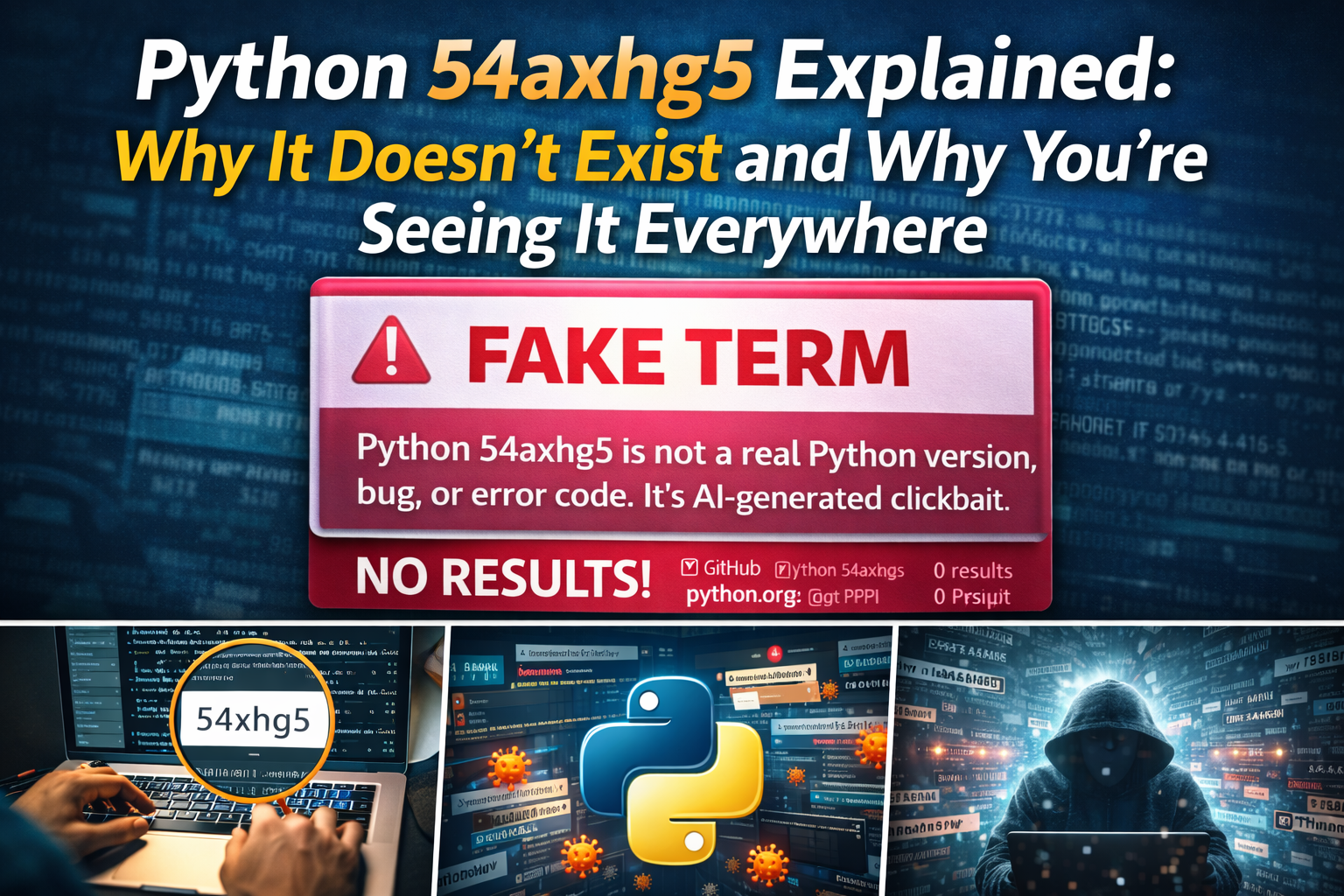
Python 54axhg5 is not a real Python version, bug, or error code. It does not appear in any official Python documentation, releases, PyPI packages, or GitHub repositories. The term spread in late 2025 through AI-generated SEO content, not through the Python Software Foundation.
presented as a new Python version, a hidden bug, an enhanced library, or a cryptic error code. Articles promise “ultimate guides,” “root cause analyses,” and “breakthrough features.”
The reality is simple: Python 54axhg5 does not exist.
It is not an official Python release, module, package, bug identifier, or feature from the Python Software Foundation. As of 21 January 2026, Python’s stable releases remain within the 3.12–3.13 series, with 3.15 in early alpha stages. No alphanumeric identifiers such as “54axhg5” appear in any official Python documentation, release notes, PyPI listings, or GitHub repositories.
Why Does “Python 54axhg5” Appear Online So Often?
The spread of this term is a clear example of AI-generated SEO bait.
Low-quality content networks publish hundreds of articles around fabricated technical terms to capture accidental or curiosity-driven searches. Several recurring patterns explain why “Python 54axhg5” gained visibility:
1. The Phantom Bug Narrative
Many pages describe “54axhg5” as a rare, hard-to-reproduce Python bug involving concurrency, memory leaks, or mysterious runtime failures. While these articles reference real Python pitfalls, the identifier itself is fictional.
2. Fake Version or Feature Hype
Some sites market it as a “major Python update” with performance boosts, async improvements, or security enhancements. No such release exists.
3. Internal Identifier Claims
Others suggest it is a private hash, build ID, or internal ticket reference. While plausible inside isolated corporate systems, there is no evidence of any public or widespread usage.
4. Sudden Publication Spike
Most articles appeared between November 2025 and January 2026, typically on obscure blogs with generic formatting and recycled phrasing, a common footprint of automated content generation.
Because few users initially searched for the term, this low-quality content ranked easily. However, searches across official sources such as python.org, PyPI, and GitHub return zero relevant results.
What Should Developers Do If They Encounter “Python 54axhg5”?
If you see “Python 54axhg5” referenced in logs, tickets, or online posts, follow these steps:
Check the Context
It may be:
- A project-specific placeholder
- A custom hash or build identifier
- A label generated by an internal tool or CI pipeline
Verify with Trusted Sources
Always confirm claims using:
- Official documentation at docs.python.org
- PyPI package listings
- GitHub repositories
- Established communities such as Stack Overflow or r/Python
Avoid Clickbait Fixes
Articles claiming to “fix” Python 54axhg5 are addressing non-existent problems and may include misleading or unsafe code.
Focus on Real Python Issues
Common hard-to-trace Python problems include:
- Mutable default arguments
- Race conditions in threading or asyncio
- Late binding in closures within loops
Use proven tools such as logging, pdb, pytest, and structured debugging techniques instead of chasing fictional errors.
The Bigger Picture: AI Content Flooding Developer Searches
“Python 54axhg5” is not an isolated case. Similar fake identifiers frequently appear across programming searches as AI systems generate large volumes of unverified content.
As a result, developers increasingly need to:
- Rely on official documentation
- Cross-check unusual claims
- Be skeptical of unexplained alphanumeric “error codes”
Critical thinking is now an essential skill in technical search.
Python 54axhg5 Is a Myth
To be clear: Python 54axhg5 is not real.
It is not part of Python’s past, present, or future roadmap.
If you want to stay up to date with genuine Python development, focus on:
- Performance improvements in Python 3.13
- Ongoing work in Python 3.15 alpha
- Real proposals published through Python Enhancement Proposals (PEPs)
Save your time, ignore fabricated terms, and keep coding with real Python.
