
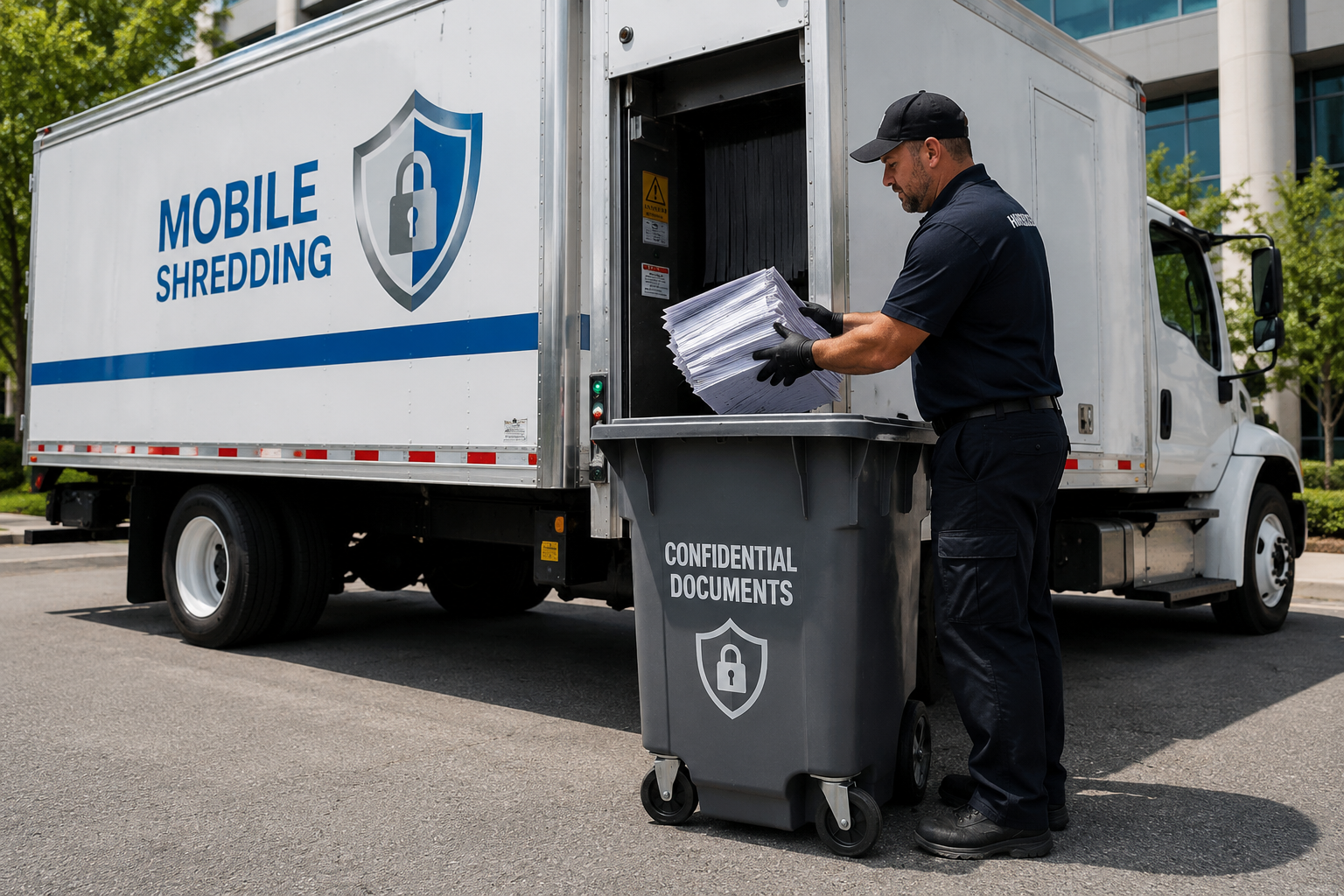
Document shredding is the process of mechanically destroying paper records and other media containing sensitive information by cutting them into strips, confetti-like pieces, or fine particles so the original data cannot be read or reconstructed. It serves as the primary, cost-effective method for businesses and individuals to safely dispose of financial, medical, and personal documents while complying with US privacy laws.
For most Americans, the key questions center on timing, methods, and whether to handle it personally or hire professionals. The right approach depends on document sensitivity, volume, and applicable federal or state regulations. Proper shredding protects against identity theft and helps meet legal obligations that treat careless disposal as a serious risk.
What Document Shredding Really Means
Document shredding converts intact paper into unreadable fragments using desktop machines for small jobs or industrial equipment for larger volumes. Professional services typically use two models: on-site mobile shredding, where a truck destroys materials at your location for witnessed security, and off-site shredding, where locked bins are collected and processed at a secure facility. Both maintain strict chain-of-custody protocols. Individuals and small offices often rely on personal cross-cut or micro-cut shredders for everyday needs.
Why Document Shredding Matters
Discarded paper remains a leading source of identity theft because it often contains Social Security numbers, account details, medical histories, or financial data. Shredding eliminates this vulnerability at the source. For organizations, it is not optional but a legal requirement under multiple federal rules designed to protect consumers.
Compliance Laws That Require Shredding
Several key federal laws mandate secure disposal:
- FACTA (Fair and Accurate Credit Transactions Act): Applies to businesses handling consumer credit reports and requires reasonable measures to destroy such information.
- HIPAA: Covers healthcare providers, insurers, and business associates, mandating secure destruction of protected health information.
- GLBA (Gramm-Leach-Bliley Act): Requires financial institutions to implement safeguards for customer data, including proper disposal.
- State Laws: Many states, such as California, impose additional requirements for the disposal of personal information.
Non-compliance can lead to fines, lawsuits, and reputational harm. Most mid-sized and large businesses therefore partner with certified vendors rather than relying solely on in-house equipment.
How Long to Keep Documents Before Shredding
A balanced retention schedule prevents both premature destruction and unnecessary hoarding. The Federal Trade Commission offers practical guidance:
- Keep Forever (in a secure location): Birth certificates, Social Security cards, passports, marriage/divorce decrees, property deeds, and death certificates.
- Tax Returns: Keep indefinitely as a conservative approach.
- Tax-Related Receipts and Canceled Checks: 7 years.
- Pay Stubs: Until reconciled with your W-2.
- Bank Statements, Credit Card Statements, and Medical Bills: 1 year (unless disputed).
- Utility Bills and Sales Receipts: Until paid and no longer needed for warranties or taxes.
Review files annually to stay organized and reduce clutter.
Shredding Methods Compared
Shredder security is measured by DIN 66399 levels (P-1 to P-7). Not all methods provide equal protection:
- Strip-Cut: Long vertical strips (P-1/P-2). Basic security for low-sensitivity items.
- Cross-Cut: Small rectangular or diamond pieces (P-3/P-4). Suitable for most home and small business documents.
- Micro-Cut: Tiny particles (P-5 and higher). Ideal for tax records, medical files, and highly confidential materials.
Cross-cut or micro-cut models are strongly recommended for anything with personal identifiers, as strip-cut pieces can sometimes be reassembled.
DIY Shredding vs Professional Shredding Services
Personal shredders work well for light household use but struggle with high volumes, maintenance, and compliance documentation. Professional services address these gaps by offering industrial capacity, audited processes, certificates of destruction, and witnessed options that satisfy regulators. Healthcare practices, financial firms, and other regulated entities typically require certified vendors for audit-ready proof.
Top 5 Document Shredding Service Providers in the USA
These established national providers stand out for scale, NAID AAA certification (the industry gold standard), and service reliability:
- Shred-it: Operates one of the largest fleets in North America with extensive NAID AAA-certified mobile and plant-based facilities. It excels in on-site shredding and customer satisfaction for businesses of all sizes.
- Iron Mountain: Combines shredding with broad records management. It offers on-site, off-site, and bulk services starting around 140 USD, with strong compliance support across thousands of locations.
- Access: Features over 130 facilities nationwide and provides integrated document destruction with records storage. It maintains NAID AAA certification and is flexible on-site/off-site options.
- PROSHRED: A NAID-certified network emphasizing mobile on-site shredding through franchise locations. It delivers consistent service for scheduled and one-time needs.
- American Shredding: Focuses on secure paper and electronics destruction with a nationwide reach and emphasis on recycling. It suits clients seeking eco-friendly, comprehensive solutions.
Always verify current local availability, request quotes, and confirm NAID AAA status for your area.
Average Cost of Document Shredding Services
Costs depend on volume, service type, and location. One-time small projects (1-10 boxes) often range from 110 USD to 175 USD. Per-pound rates typically fall between 0.75 USD and 2.00 USD for off-site and higher for witnessed on-site. Recurring contracts and bin rentals offer better value for ongoing business needs. Drop-off options provide the most affordable route for individuals.
How to Choose a Certified Shredding Provider
Evaluate providers using these criteria:
- NAID AAA Certification: Ensures audited security standards, background checks, and compliant processes.
- Certificate of Destruction: Provides essential legal documentation after each service.
- Service Flexibility: On-site for high sensitivity versus off-site for convenience and cost.
- Reputation: Check Better Business Bureau ratings and recent local reviews, as quality can vary by region even with national brands.
- Pricing Transparency: Compare minimum fees, per-pound rates, and contract terms.
The strongest choice often combines national standards with strong local execution. Request references and tour facilities when possible for high-volume or regulated work.
Document shredding delivers straightforward, high-impact protection in an era of persistent identity risks and evolving regulations. By adopting consistent habits, selecting appropriate tools or partners, and staying informed on retention rules, US consumers and businesses can minimize exposure while contributing to responsible recycling. Making secure disposal routine today safeguards privacy and compliance long into the future.
