
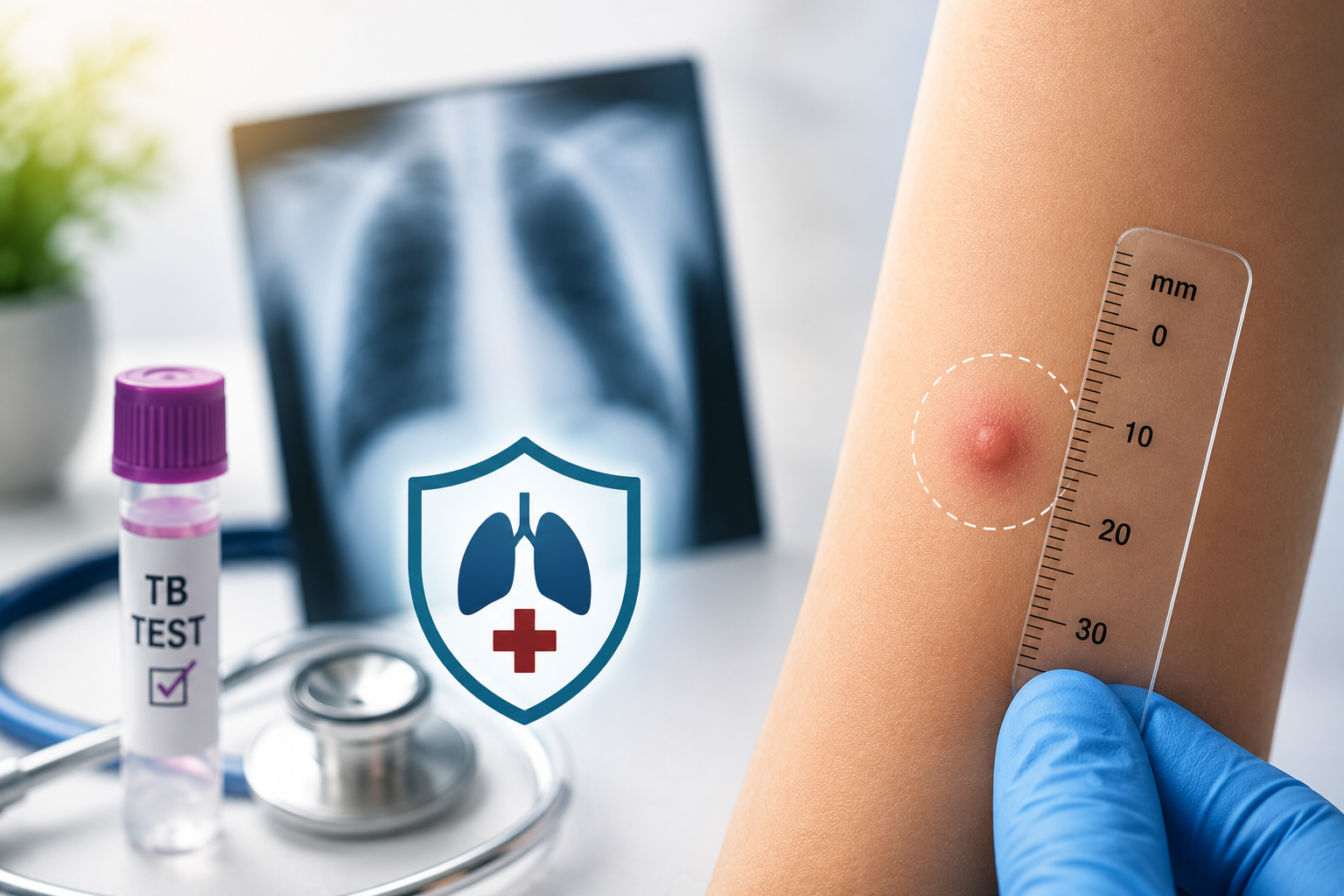
Getting a positive TB skin test result can be worrying. Many people immediately assume they have active, contagious tuberculosis. In reality, most positive results indicate latent (inactive) TB infection rather than active disease. Understanding what the result means and taking the right next steps can bring peace of mind and protect your long-term health.
This comprehensive guide explains everything about a positive TB skin test: how results are interpreted, what happens next, treatment options, differences from blood tests, and answers to the most common questions. With clear information, you can approach your follow-up appointment confidently.
What Is a TB Skin Test?
The TB skin test, also known as the Mantoux tuberculin skin test (TST) or PPD test, detects whether your immune system has responded to the bacteria that cause tuberculosis (Mycobacterium tuberculosis). A small amount of tuberculin is injected under the skin of your forearm. You must return in 48 to 72 hours for a trained professional to read the result.
The test does not diagnose active TB. It only shows if you have been exposed to the bacteria at some point.
What Does a Positive TB Skin Test Look Like?
A positive result is determined by the size of a firm, a raised bump (called induration) at the injection site. Redness without a raised bump does not count as positive.
Induration Measurement Guidelines (CDC Standards)
- 5 mm or more: Positive for high-risk individuals (HIV positive, recent close contact with active TB, organ transplant patients, or those on immunosuppressive drugs).
- 10 mm or more: Positive for moderate-risk people (healthcare workers, recent immigrants from high-TB countries, people with diabetes, residents of nursing homes or prisons).
- 15 mm or more: Positive for people with no known risk factors.
Your doctor considers both the bump size and your personal risk factors when interpreting the result.
What a Positive Result Actually Means
A positive TB skin test means your body has developed an immune response to TB bacteria. It does not automatically mean you have active TB disease.
There are two main possibilities:
- Latent TB Infection (LTBI): Bacteria are present but inactive. You have no symptoms, feel healthy, and cannot spread TB to others. About 90% of people with latent TB never develop active disease.
- Active TB Disease: Bacteria are multiplying, causing symptoms like persistent cough, fever, night sweats, weight loss, or coughing up blood. This form is contagious.
Most positive skin tests turn out to be latent TB, especially if you have no symptoms.
Positive TB Skin Test vs TB Blood Test (IGRA)
| Feature | TB Skin Test (TST) | TB Blood Test (IGRA) |
|---|---|---|
| How It Works | Skin injection, read in 48-72 hours | Single blood draw |
| Number of Visits | Two | One |
| Affected by BCG Vaccine | Yes (can cause false positives) | No |
| Accuracy | Good but can have more false positives | Generally higher specificity |
| Best For | Young children, certain screenings | BCG-vaccinated adults, healthcare workers |
Blood tests (QuantiFERON or T-SPOT) are often preferred for people who received the BCG vaccine or may not return for the second skin test visit.
What to Do After a Positive TB Skin Test
Follow these steps promptly:
- Get a Chest X-ray — This is the most important next step to check for signs of active TB in the lungs.
- Medical Evaluation — Your doctor will review symptoms, medical history, and risk factors.
- Additional Testing — May include a confirmatory IGRA blood test or sputum (phlegm) samples if active disease is suspected.
- Diagnosis and Treatment Plan — Latent or active TB is confirmed, and appropriate treatment begins.
Keep records of your positive result for future medical visits.
Treatment Options for Positive TB Skin Test
For Latent TB Infection
Treatment prevents the infection from becoming active later. Modern options are shorter and easier:
- 3HP: 3 months of once-weekly isoniazid + rifapentine (only 12 doses)
- 4R: 4 months of daily rifampin
- 3HR: 3 months of daily isoniazid + rifampin
- Longer options (6-9 months of isoniazid) if needed
These treatments are about 90% effective at preventing active TB. Complete the full course even if you feel fine.
For Active TB Disease
Requires multiple antibiotics for 4-9 months or longer. Isolation may be needed initially until you are no longer contagious.
Your doctor will choose the best regimen based on your age, health, and any drug resistance risks.
Who Should Get Tested for TB?
Testing is recommended for:
- Close contacts of someone with active TB
- People from countries with high TB rates
- Healthcare workers and those in high-risk settings
- People with weakened immune systems (HIV, diabetes, etc.)
- Immigrants or refugees
- Residents of nursing homes, prisons, or shelters
Routine testing is not needed for low-risk individuals.
Frequently Asked Questions About Positive TB Skin Test
Can I spread TB if my skin test is positive?
No. Latent TB is not contagious. Only active TB spreads through the air.
Does a positive test mean I have active tuberculosis?
Not necessarily. Most cases are latent TB. A chest X-ray helps determine this.
Can the BCG vaccine cause a false positive?
Yes. If you received the BCG vaccine (common in many countries), a blood test (IGRA) is more reliable.
How long does treatment last?
Latent TB treatment usually takes 3-4 months with newer regimens. Active TB takes longer.
Will I always test positive in the future?
Yes. Once positive, skin tests usually remain positive even after treatment. Doctors use other methods for future checks.
Can I work or go to school with a positive test?
Yes, if you have latent TB and your chest X-ray is normal. No isolation is needed.
Conclusion: A Positive Result Is Manageable
A positive TB skin test is an important signal from your immune system, but it is rarely a medical emergency. In most cases, it leads to a straightforward diagnosis of latent TB that can be effectively treated with short modern regimens, greatly reducing your future risk.
Do not ignore the result. Contact your healthcare provider right away for a chest X-ray and proper evaluation. Early action gives you excellent options and peace of mind.
Taking care of your health after a positive TB skin test is a smart step that protects both you and those around you. Stay informed, follow medical advice, and move forward confidently. If you have concerns, speak with your doctor today.
